Uganda is strengthening its national response to sickle cell disease, a genetic blood disorder that remains a major contributor to illness and death among children under five years of age. Health authorities say tackling the disease is essential for Uganda to achieve its child survival and under-five mortality reduction targets.
The Ministry of Health Permanent Secretary, Dr. Diana Atwine, says sickle cell disease not only affects families emotionally and financially, but also places a heavy burden on the national health system. Many children born with the condition die before their fifth birthday, making targeted prevention and treatment a critical public health priority.
Dr. Atwine explained that sickle cell disease significantly increases demand for blood transfusions, as affected children often require repeated transfusion support. Reducing preventable complications linked to the disease is therefore key to stabilising Uganda’s blood supply and easing pressure on health services.
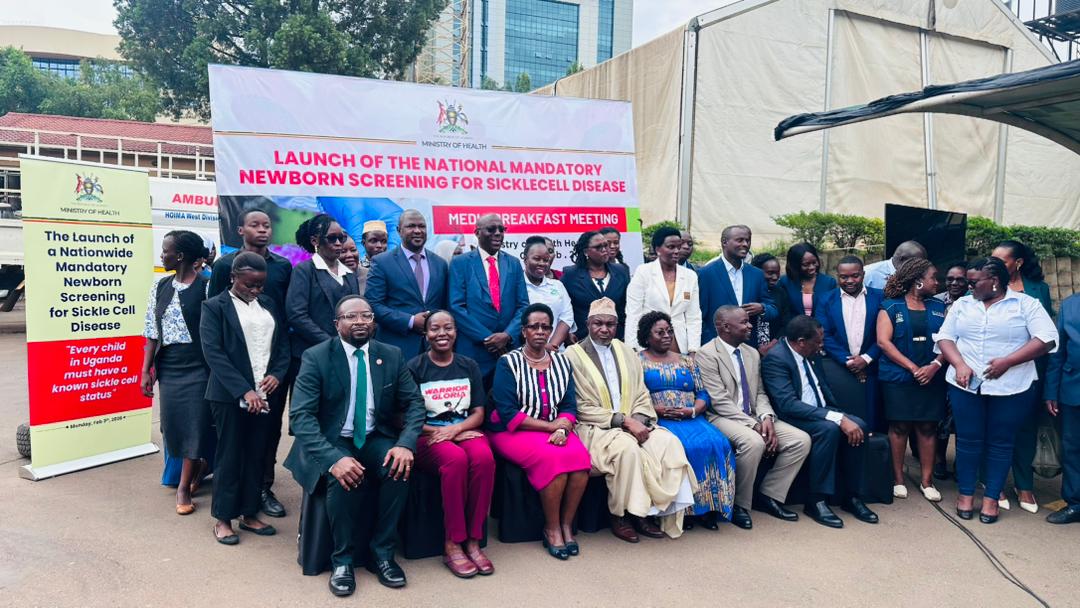
To address this, the Government of Uganda has fully integrated sickle cell prevention, diagnosis and treatment into the national health system, ensuring that screening and follow-up care are available at public health facilities across the country rather than through isolated programmes.
Specialised sickle cell clinics have been established and staffed with trained health workers to manage complications such as organ damage. National clinical guidelines have also been rolled out, and health workers trained, to improve the quality and consistency of care provided nationwide.
A major milestone in Uganda’s response is the scale-up of newborn screening. Laboratory capacity has been strengthened and rapid diagnostic technologies similar to those used for HIV testing are being deployed to make screening faster and more widely accessible.
Access to treatment is also improving. Hydroxyurea, a medicine that reduces sickle cell complications, is being added to the national essential medicines list and distributed to lower-level health facilities. While funding challenges remain, the Ministry of Health is working with partners to expand supply.
Early diagnosis through newborn screening allows affected children to be linked to life-saving care, including vaccination, preventive antibiotics, malaria protection, disease-modifying treatment and parent education. These interventions significantly reduce complications, hospital admissions, disability and deaths.
Dr. Atwine also highlighted premarital counselling and testing as a powerful long-term prevention strategy. Countries that have introduced mandatory screening before marriage have achieved major reductions in new sickle cell cases, and Uganda is exploring similar approaches.
Health leaders are also calling for increased public awareness to fight stigma, myths and misinformation that delay treatment. Some families still attribute the disease to non-medical causes, resulting in late hospital visits when complications are already severe.
Dr. Atwine urged stronger collaboration among government institutions, health workers, media, religious and cultural leaders, and development partners to promote accurate information, encourage testing, and support early treatment.
She further called on mothers and caregivers to ensure that all children especially those with sickle cell disease, receive full vaccination, including extra protection against serious infections.
While bone marrow transplantation remains the only potential cure, its high cost makes it inaccessible to most families. For now, prevention, early diagnosis and sustained care remain Uganda’s most effective and affordable strategy.
Despite resource constraints, the national response is now fully underway. With expanded screening, stronger partnerships and improved treatment access, Uganda aims to significantly reduce illness and deaths linked to sickle cell disease, bringing the country closer to its child survival goals.
Dr. Atwine concluded by thanking clinicians, partners and stakeholders supporting sickle cell services across the country, reaffirming the Government’s commitment to protecting the health and future of Uganda’s children.